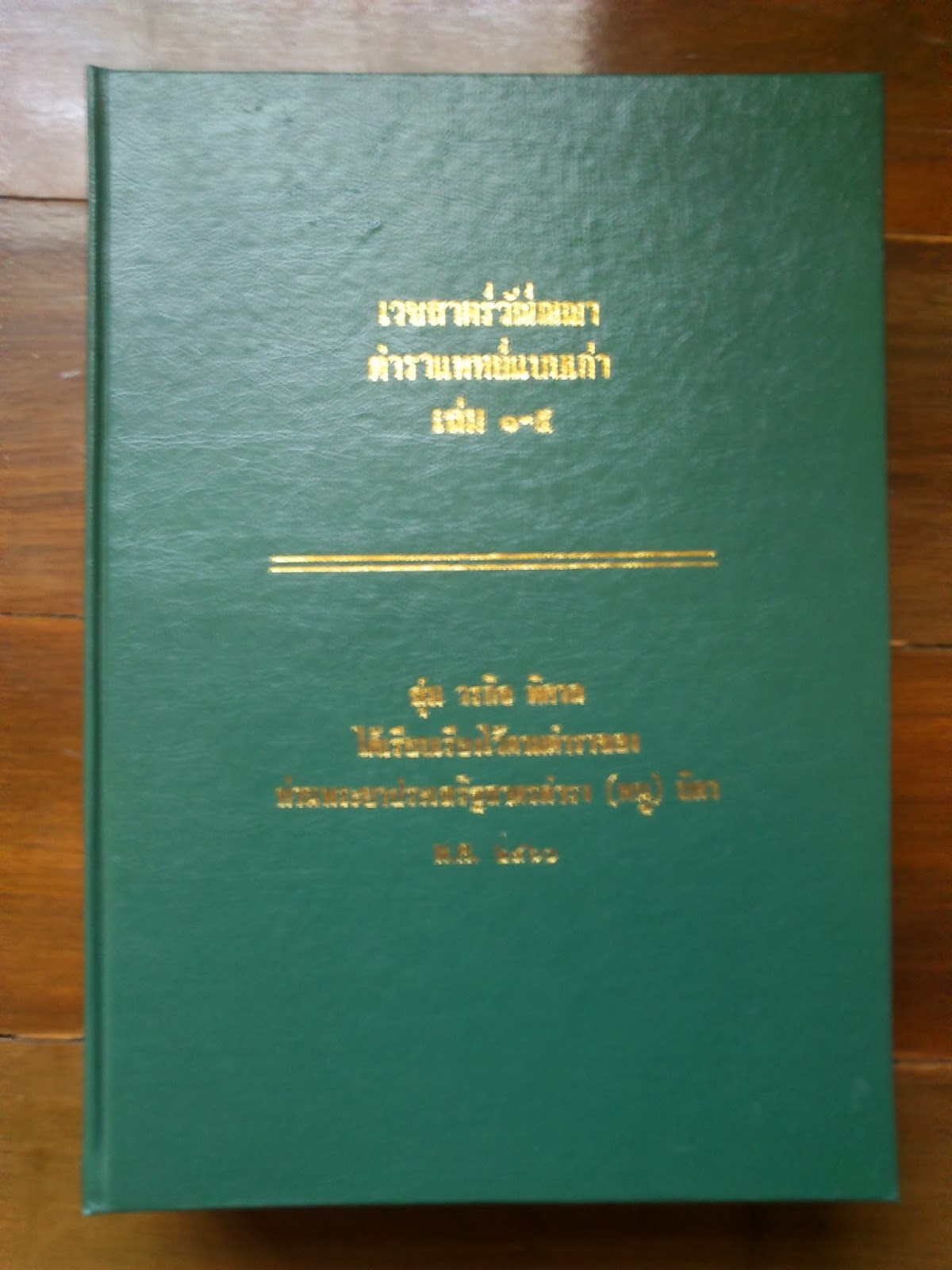
An essential aspect of Traditional Medicine of Thailand,
Reusi Dat Ton, which still remains widely unknown, is a system of exercises
including self-massage, dynamic exercises, postures, stretching and breathing
exercises, mantras, visualization and meditation. Its principal purpose is to
explore one’s own body and mind, and to understand how they function. Once we
reach that understanding, only then can we also begin to understand how those
around us function. If we are unable to keep ourselves in balance, our attempts
to help others find balance will inevitably be futile.

Apart from this process of self-realization, performing
Reusi Dat Ton exercises can also keep oneself in good health. With significant
experience, a practitioner may apply Reusi Dat Ton to others as a specific kind
of therapy. Nowadays, most of the chronic illnesses that we come across in a
medical practice are the result of long-term harmful habits in our daily lives.
Reusi Dat Ton exercises, as an everyday practice, are powerful counter-measures
a person can take to remedy unhealthy habits and to improve general health.
As
the system from which Thai Massage evolved, Reusi Dat Ton is the first and the
most important form of physical therapy in Traditional Medicine of Thailand and
shares the same theoretical foundation as all other aspects of traditional
medicine in Thailand: herbal medicine, physical therapies, divination practices,
magic and Buddhism.

The essence of the theoretical knowledge of these five roots
of Thai medicine is encapsulated in the theory of Elements, which offers an
understanding of the ways that mind and body function and interact with
environment and also explains the functioning of the entire universe known to
us. All practical disciplines in Traditional Medicine of Thailand are grounded
in this theory, including Thai anatomy and physiology.
Some of the physical therapies, such as Nuat Boran (massage)
are distinguished by a bigger emphasis on treating the external body and are
applied to produce an effect on the physical body, whereas other therapies,
such as Tok Sen, Yam Kahng or Chet Haek, are simultaneously semi-external and
semi-spiritual.


In treating the physical body, a practitioner is treating
both the body and its functions. The physical body itself is made of the
elements Earth and Water, while the functions of the body consist of the
elements Fire and Wind. The application of massage techniques to the physical body primarily balances the Wind element, which indirectly
addresses the other elements.


Apart from a body, the human being has a mind, which is made of Wind element and exists in the Space element. The
Wind manifesting in the physical body is called gross Wind, whereas the Wind
manifesting in the subtle body, or the mind, is called subtle Wind. The gross
Wind is all the movements of the physical body, while the subtle Wind is the
movement of the mind - thoughts, sensations and emotions. The gross aspect of the Wind moves
through physical Sen channels, while the subtle aspect of the Wind in the body
and around the body moves through psychic Sen channels.

Like many varieties of Hindu and Tibetan yoga, Reusi Dat Ton
is a system with a holistic approach of the human being, meaning there is an
understanding that the practices affect both the mind and the body. And, like
other yoga systems, Reusi Dat Ton cultivates the physical body and the mind
together. However, these individual yoga systems are distinguished from one
another by view and by the theoretical concepts from which each has
respectively evolved.


As with some other physical therapies of Traditional Medicine
of Thailand, Reusi Dat Ton primarily works upon the Wind element. Self-massage,
dynamic exercises, postures and stretching have a stronger effect on gross
Wind, whereas the techniques of mantras, visualization and meditation have a
stronger effect on the subtle Wind. However, it should be stressed that both
gross and subtle Winds are fully interconnected and mutually dependant; they
are the two aspects of the same element.
With serious examination and practice of Traditional Medicine
of Thailand, it becomes clear that all of the different aspects, including
massage, Reusi Dat Ton, Herbal medicine, Magic, Divination or Tok Sen, are all
infused with the same spirit, complement one another, and, together form a
complete living system. Like an ocean, the depths and interconnectedness of the
system are unfathomable, and it is better to dive deep into it than to keep
swimming in circles.
About the author
I have been practicing Reusi Dat Ton on a daily basis for twelve years now and I am writing this essay based on my own personal experience, as an initiated practitioner of Traditional medicine of Thailand and having been taught by a living Reusi. For the last twenty five years I am committed to the preservation, research and teaching of Traditional Medicine of Thailand. I live and work in Belgrade, Serbia.
I would like to thank Jessica Dafni for the final edit of this article.
I have been practicing Reusi Dat Ton on a daily basis for twelve years now and I am writing this essay based on my own personal experience, as an initiated practitioner of Traditional medicine of Thailand and having been taught by a living Reusi. For the last twenty five years I am committed to the preservation, research and teaching of Traditional Medicine of Thailand. I live and work in Belgrade, Serbia.
I would like to thank Jessica Dafni for the final edit of this article.